Why You Are Exhausted But Not Doing That Much
A 45-minute live clinical session for late-identified ND women — and the framework that finally explains it, so you can stop running on empty.
One registration · Live session + replay access
Register for $25Limited Zoom capacity — register early to secure your spot.
Sound familiar?
You look at your week and it doesn't add up.
You didn't do that much. You didn't run a marathon or work a fourteen-hour day. You went to a few appointments, answered some messages, got through the school drop-off. Ordinary stuff.
And yet you are completely flattened.
You've probably told yourself it's your attitude. Or that you need to push through. Or that everyone else manages this and you should too.
Here's what's actually happening: you are in burnout. Not "a bit stressed." Not "overdramatic." Burnout — and it arrived faster than it would for a neurotypical person, for reasons that have nothing to do with how hard you're trying.
This masterclass is about recognising it accurately. Because you can't work with something you haven't named.
The four indicators
Burnout in an ND body looks like this:
Rest — but not really
No active rest happening. Doomscrolling, split screens, the constant background hum of I should be doing something. The body never fully resets.
Sleep — but not restorative
Can't get to sleep. Can't stay asleep. Staying up late because it's the only time that belongs to you — and then not actually resting. Sound familiar?
Physical pain
Feet. Lower back. Neck. Jaw. ND bodies carry a high rate of co-occurring conditions that turn sustained tension into real, daily pain.
Stress behaviour
How fast do you snap? How quickly do you assume you're the problem? When the whole world feels like it's fighting you — that's burnout talking, not your personality.
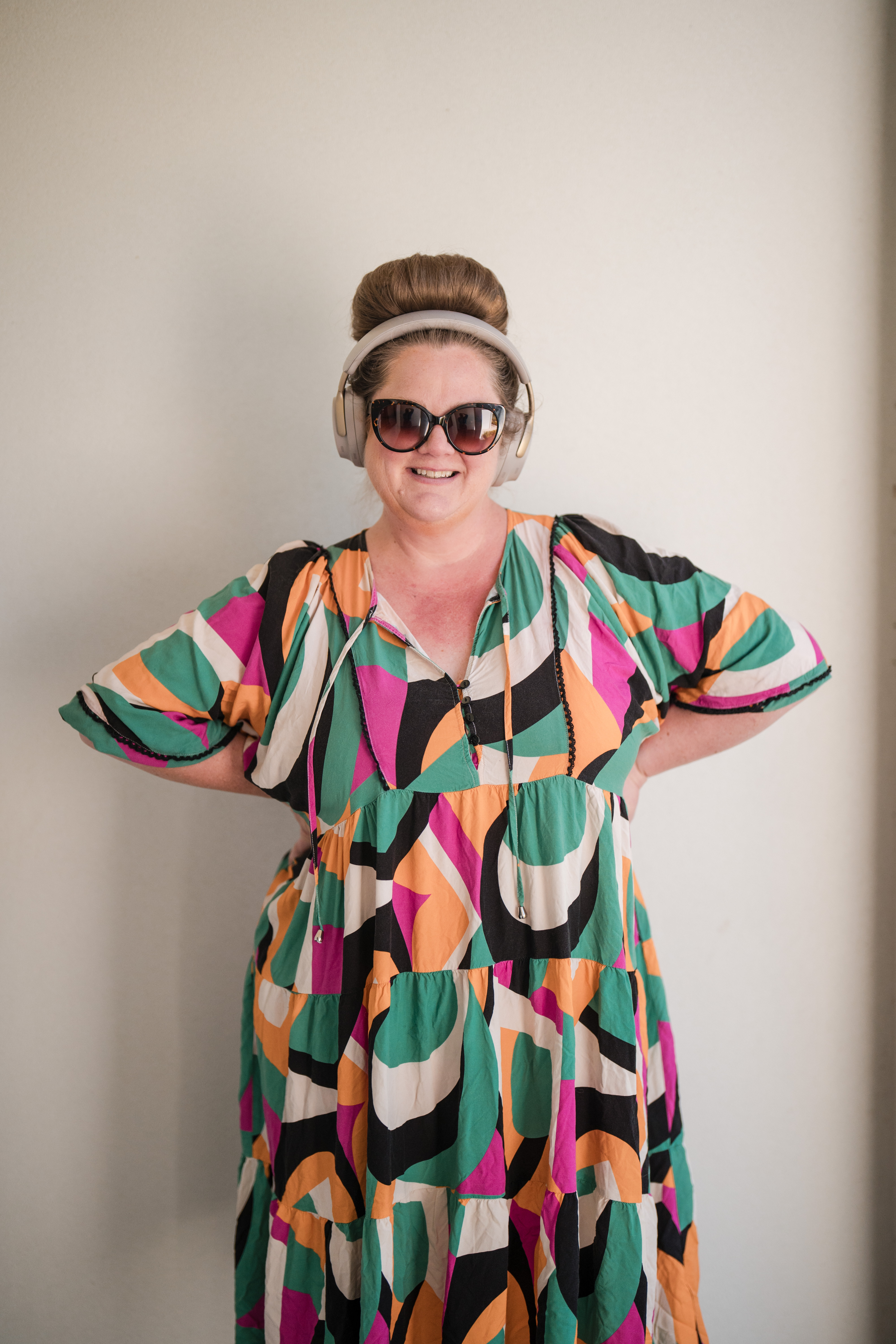
Why I teach this
I see this pattern every week.
The majority of clients who find their way to my practice arrive in burnout. I've seen these four indicators presented consistently — across different women, different diagnoses, different life circumstances — for years.
I also live with these same triggers. The difference is I now have the tools, which means I'm no longer moving into burnout. I'm not immune to the ND experience. I just know what I'm dealing with when it starts.
Joanne Hatchard
What you'll walk away with
Why ND burnout is different — and what to do about it.
Your stressors are your environment. A Tuesday with not much on it costs you more than it costs a neurotypical person. In this session, you'll learn exactly why — so you can stop blaming yourself.
Sensory environment
If you haven't identified your sensory profile, you're existing in spaces with an exhausting undercurrent you've been told to ignore. We'll name it — and how to reduce it.
Communication load
Translating from ND to NT takes capacity. The constant effort to rephrase, re-explain, be understood — it's burning your reserves and you're not tracking it.
Co-occurring conditions
EDS, POTS, MCAS, endo, fibromyalgia. These aren't rare — they're highly prevalent in ND bodies. Pain burns capacity. We'll talk about what to do with your GP.
Rejection sensitivity load
ND folk are corrected more often than NT folk — for communication, stimming, mannerisms, coping. Each correction is a capacity hit. The frequency is what drives burnout.
What's included
One registration covers everything.
| What you get | What it means | |
|---|---|---|
| ✓ | 45-minute live session | The full clinical explanation — why ND burnout is different, how to identify it in yourself, and what to do about each trigger. Delivered live with Q&A. |
| ✓ | Am I In Burnout? framework | The four-indicator assessment you can run on yourself in five minutes. Know where you stand — accurately, not vaguely. |
| ✓ | Four action pathways | Sensory, communication, physical, rejection sensitivity. One specific action per trigger. Not generic wellness advice. |
| ✓ | Live Q&A with Joanne | Ten minutes of direct access to a neurodiverse family therapist. Bring a real question. Get a clinical answer. |
| ✓ | Full replay access | The recording is available to all registered attendees within 24 hours. You won't miss a thing if you can't make it live. |
Is this for you?
Who this is — and isn't — for.
This is for you if:
- You're a late-identified neurodivergent woman — or suspect you might be
- You're exhausted in a way that doesn't match what you're doing
- You've been told to rest, push through, try harder — and none of it has helped
- You want a clinical explanation, not a wellness platitude
- You're a parent of a neurodivergent child and recognising yourself in their patterns
This isn't for you if:
- You want a motivation session or mindset reset
- You want someone to tell you everything is fine
What people say
From women who've worked with Joanne.
"I just had exactly this over the weekend with my family, and I'm going to make my husband watch this, because the cost of maybe is too high for me."
— Dot, NSW
"Thank you for your information. Greatly appreciate it and will work on the No."
— Linda, VIC
Ready?
Join us Monday 20 July.
Live on Zoom at 12:00 pm ACST. Replay available within 24 hours. One registration covers both.
AUD · One-time · Live + replay
Limited Zoom capacity — register early.
- 45-min live session with Joanne
- Am I In Burnout? framework
- Four ND-specific action pathways
- Live Q&A
- Replay within 24 hours
Secure checkout · Instant confirmation email
Questions
Frequently asked.
Is this recorded?
Yes. The replay is available to all registered attendees within 24 hours of the live session.
Do I have to attend live?
No. Register once and you get both the live session and the replay. You won't miss anything — the full content is in the recording.
I'm not sure if I'm neurodivergent. Is this still for me?
Yes. If you're in the process of figuring that out — especially if you're a parent of a neurodivergent child and recognising your own patterns — this session is directly relevant.
Is this therapy?
No. This is a clinical education session. Joanne is a qualified neurodiverse family therapist, and the frameworks she teaches are drawn from clinical practice — but attending a masterclass is not the same as being in therapy.
What platform is it on?
Zoom. The link will be in your confirmation email immediately after registration.
What if $25 is a stretch right now?
That's fair. The replay will be available after the live date — same content, same price. Register when you're able.
"You were never lazy. You were never dramatic. You were ignoring the signs — and you didn't know who to ask anyway. Now you do. That's where it starts."Register for $25 →
Monday 20 July · 12:00 pm ACST · Live Zoom + Replay
Want to know where you sit in the BBMe framework?
Take the free ND Life Alignment Quiz →